

The Foundation of Hobby Horsing – The Basic Gaits
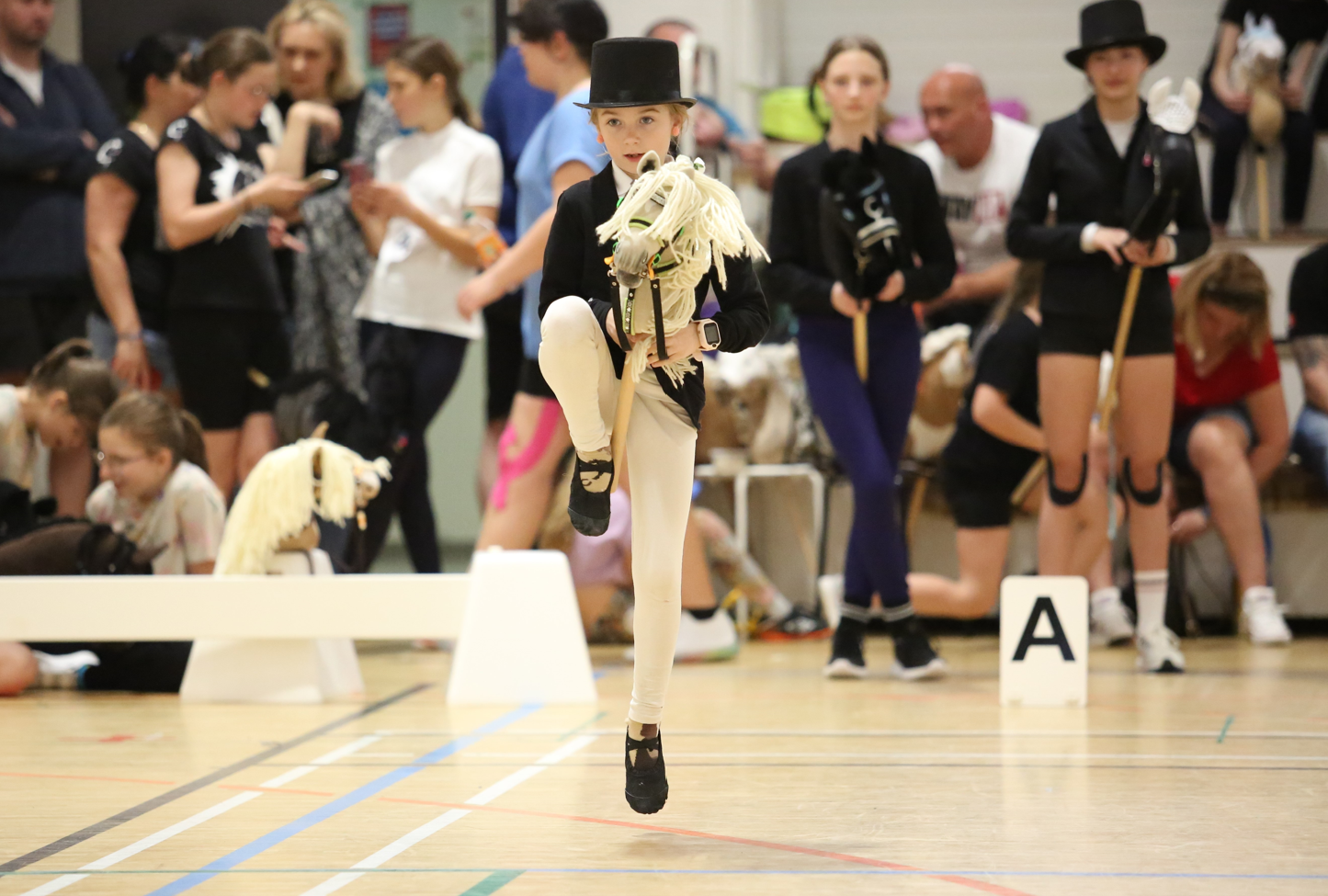
Hobby Horsing is an energetic and creative sport that combines movement, coordination, and imagination. Whether you’re just starting out or looking to improve your technique, getting the basics right makes a huge difference. Just like with real horses, everything begins with a strong foundation – the basic gaits.
If you’d like a general overview before jumping into the technical side, you can start with our guide What is Hobby Horsing?
In Hobby Horsing, there are three basic gaits: walk, trot, and canter. Learning how to perform them properly will help you move more smoothly, feel more confident, and prepare for different disciplines and competitions.

The Slowest Gait – The Walk
The walk is the slowest of all gaits and feels very similar to normal walking. It’s mainly used for warming up and cooling down. In dressage, the walk is a required element and plays an important role in transitions and maintaining a steady rhythm.
In show jumping courses, however, the walk is not allowed. Once the round starts, riders are expected to stay in faster gaits.
Tip: When walking, let your toes touch the ground first. Stay relaxed, avoid stiff movements, and focus on smooth, natural steps.
Between Walk and Canter – The Trot
The trot is quicker than the walk and feels like a light jogging rhythm. In dressage, it’s used often to show balance, coordination, and control.
In show jumping, many riders use the trot before the official start to find their rhythm and focus before the time begins.
Tip: Roll your foot smoothly from toe to heel and keep your movement fluid. A relaxed trot not only looks better, it also helps you save energy.


The Fastest Gait – The Canter
The canter is the fastest of the three basic gaits and has a clear, flowing rhythm. It’s used in both dressage and show jumping. In dressage, riders often switch between walk, trot, and canter, while in show jumping the canter is maintained from start to finish.
The canter provides the momentum needed to clear obstacles, but it’s also the most challenging gait to master. Many riders find rhythm and balance tricky at first.
If you want to refine your technique, we recommend reading 5 Common Mistakes in Hobby Horsing Jumping , where correct canter usage plays an important role.
Remember, there are two canters: left canter and right canter. As with the other gaits, your toes should touch the ground first.
Before moving on to advanced elements or competitions, it’s important to feel confident in all three basic gaits. Once walk, trot, and canter feel natural, you’ll notice better control, improved endurance, and a more confident overall performance.
To see how these gaits are used in real competitions, take a look at our overview of Disciplines in Hobby Horsing .
With a solid foundation, every next step in Hobby Horsing becomes easier, more enjoyable, and even more rewarding.


